
Connect, Collaborate, Serve: Working Together with AT Act Programs
Description
How can your state's Assistive Technology (AT) Act Program help you support older adults who are blind or have low vision and their families? Join staff from the National Assistive Technology Act Technical Assistance and Training (AT3) Center to explore AT Act Program services and practical ways to connect and collaborate. You'll leave knowing who to contact, how to start working together, and a few assistive technology best practices to put into action.
Resources
Find your local AT ACT Center: https://at3center.net/
Presentation: November 2026 Webinar PowerPoint
Video
Transcript
Welcome to OIB-TAC’s monthly webinars, where our presenters share valuable information and helpful resources to support professionals working with older adults who are blind or vision impaired. Let's check out this month's webinar.
Hi, everyone. I'm Jennifer Ottowitz with OIBTAC, and welcome to Connect, Collaborate, Serve: Working Together with AT Act Programs. And I want to welcome today our presenters, Marty Exline and Ryan Rausch. And I'm just gonna turn it over to you gentlemen to introduce yourselves and take it away with the presentation.
So thank you Sounds good. Thanks a lot, Jennifer. Welcome everybody. I am Marty Exline, and I am with the AT3 Center, which is the Training and Technical Assistance Center, the national center for providing training and technical assistance to all of the 56 Assistive Technology Act programs.
And, tell you a little bit about myself. I'm based in Kansas City, and I was formerly the director of the Missouri Assistive Technology program as director, and then also had the opportunity to work with with funding and policy issues and prior to that from a Center for Independent Living background.
And Ryan, why don't you go ahead and introduce yourself?
Yeah. Hi, everyone. My name is Ryan Rausch. I am also the, a Training and Technical Assistance lead with AT3 Center. My background is in occupational therapy and also have had years of experience in a Assistive Technology Act program, specifically Wyoming.
So excited to be here. I actually am residing in Fort Collins, Colorado, and yeah, just really excited to be here and to talk with you all about Assistive Technology Act programs and how we can partner, or even i- for those that are already partnering, how you can strengthen those ties and collaborations.
So excited again, yeah, to be here. Marty? Yeah, and we are of course, a, a program under the Administration for Community Living. And AT programs are also under the Administration for Community Living that moved from actually RSA around 2015. With that, go ahead and jump to the next slide, Ryan. So I just wanted to touch on what we'd like to accomplish today.
We, as far as objectives, we would definitely like for folks on the meeting to be able to identify some of the key Assistive Technology Program Act services that might be useful to you or to your, to the people you work with. Connect those services to the older individuals who are blind assistive tech- assist- assistive device best practices, which are on the OIB TAC website.
And hopefully the third one, just recognize some opportunities for shared training and outreach and some other activities as well where both the assistive technology programs and the OIB programs can assist each other in what they do to help individuals get the assistive technology they need.
And then finally, just let you know who to contact when you're looking for something, when you need some assistance who you contact and maybe to take that first step as far as collaborating if it's something you don't have a chance to do already. So jump to the next slide So one thing we wanted to know about is where you're starting.
And maybe this is something you could put in the chat, but I was gonna just read off kind of four s- responses to how connected are you with your state Assistive Technology Act program. And so we wanted to know, is it, do you collaborate regularly? Do you know the program but rarely connect?
Or have you heard of the assistive technology programs but don't know much about its services? Or it's new to me. I see one new to me. So just if you have a chance, go ahead and- Just respond in the chat.
Which I know but rarely connect.
Recently started engaging with them.
Don't know the services.
New to the field? Okay, agency connects with them.
Anybody else?
Good. That's good to know. So I think there's kind of a wide variety. People have worked with them and some they are new. So I think that's good to know. Go ahead, Brian, and jump to the next slide so just wanted to let you know, too where the assistive technology programs reside. And one thing that we realized is all those different assistive technology programs h- tend to have different names.
In Missouri it's called Missouri Assistive Technology, and in Pennsylvania it's called TechOWL. The, the names are different, so that's o- one area where it's good to know that. And you'll have a chance to look at our directory later on. We have a link to our directory, so hopefully that'll be helpful.
But some of the programs, there's programs e- they're either located in state government, and examples include voc rehab education and health agencies, with the majority of those 21 programs are located in state government. The majority of those are-- would be in vocational rehabilitation. 21 programs are located in universities, and of lots of those on the University Centers for Excellence in Developmental Disabilities.
And then 14 of the programs are located in nonprofit agencies, either standalone assistive technology nonprofits or part of a larger organization like Easterseals. But they all provide-- required to provide the same types of services. Some provide some additional services. And depending on the setting, sometimes that's an advantage, maybe in a university or state government, but also nonprofits certainly have some advantages in some of the programs that, that they can provide Go ahead and jump to the next one All right.
So as Marnie described, there are a lot of programs, and they all look a little bit different depending on their w- ways that they are structured. But however, they are all mandated to carry out these Assistive Technology Act activities. And really, the whole goal of the Assistive Technology Act is to increase acquisition and access to devices, as well as to increase knowledge and capacity.
And so a lot of the programs do this through a variety of ways. But for the more of the core activities they do it through device demonstrations, device loans, and device reutilization, or sometimes I refer to as reuse, and lastly, state financing. Now, the other side of this is that increasing knowledge and capacity, they...
it may come through training, technical assistance, public awareness, and/or information and assistance. And I'll go more in depth here in just a sec. So device demonstrations this is one activity that all programs carry out. They help an individual compare before making that decision to purchase.
They go through the features, they go through the functions they walk an individual how to turn it on and off. There are a number of devices that are in the demonstration inventory or in the program. And some of those can be magnification, text-to-speech and reading tools, smartphone accessibility features, accessible labeling and daily living.
And device demonstrations really provide that opportunity of an individual to compare and contrast the features and ultimately help them make that decision. Because as you, as some of you may know it sounds like some are n- new to the field, but assistive technology is a moving target, and it can be very expensive.
The, as far as when you look at a m- magnification device like a CCTV, that can be, anywhere from three thousand to s- six thousand dollars. Those, those devices are not cheap, and so we wanna make sure that individuals are making the best decisions that they can. And so device demonstration is one area or activity that the programs provide.
Another activity that AT Act programs provide are device loans. Now, these device loans allow the individual to try it in their environment, and it al- not only allows them to trial it in their environment, but it may also provide a temporary accommodation. So think about when an individual needs to send in their braille notetaker in to Humanware and get that updated or a new battery or just refurbished or cleaned, while they're waiting for that to be sent back from the manufacturer this is another opportunity, or this is an opportunity that can help fill that gap. So device loans are a great activity that helps individuals not only try the device before they buy, but it also provides them once they have a device if they need to get for any reason, send it in, or, to get fixed, repaired, and so on.
The third activity or the third component to device loans is training. It allows professionals like yourselves to check out and then take that device to say oh, a senior center or any groups like the Parkinson's group, or it allows you to go and train a large amount of people on devices.
So we do allow for that to happen and take place. So our device loan programs are typically short term, thinking about 30 days. But again, I wanna stress here is that every program may have a little different terms and conditions here as far as their programs, how they're run.
Some programs may charge a shipping fee. Some programs may ship that device out to an individual or yourselves for free but ask for it to be paid the shipping cost back to them. So Ultimately, device loans help individuals try it out in their environment and that's, one of AT's best practices is, hey try it out in your environment, whether that's at Walmart, the church or even in their home.
It helps them make that informed decision. Again, I wanna stress assistive technology is not cheap and we wanna ensure that individuals are able to try before they buy. In addition, some of the device loans we also have multiple devices that may cover a certain need, like the CCTVs.
There are a number of manufacturers out there and so getting to test side by side and make that again, informed decision is critical. So our device loans are another great activity to to get connected with The next activity the third out of the four is reutilization. As I mentioned before, it is sometimes called reuse.
This is what I like to call the Goodwill store, where Assistive Technology Act programs take in gently used equipment. They may clean it, they may sanitize it, they may check it, they... for safety. They may even put in new batteries. They may put new bolts in, get it all refurbished and get it back to working order and provide that at low to no cost for individuals.
So a little later, I'll give some examples, but yeah, this is a great opportunity for individuals to get some just good used equipment. And for those individuals that may have some financial challenges and just are not able to purchase the device. In addition, reuse can also help individuals navigate or, spread that gap out.
Maybe they're getting something, but there's a long process to, to it all, and this can help in the meantime. So reuse programs are a great opportunity to get those devices in the hands fairly quickly once an individual knows that what they need. Lastly, of the four activities is state financing.
Now, state financing supports AT acquisition through financial loans and other initiatives. So there's low interest loans. Not all 56 programs have a financial low-interest loan but a lot do. So you'll need to, again, check in with your own program, and which we'll give you guys that link here in just down the road here today.
But low-interest ro- loans help pay pay off a little bit of that interest and make it a little bit more affordable. And so in addition to low interest, they may extend monthly payback periods, which helps with that whole monthly payment. This is a payback, so individuals have are required to pay money back, but it is a little bit better than what I would say a personal loan.
An example, I don't know where personal loans are at right now, but I'm just gonna guess around 7% is their interest rate. And then there are with the pay down some programs may offer a 4% interest rate. That's what I'm talking about when about the low-interest loans. The next one is last resort funds.
Now, this is oftentimes what I would consider a grant, where an individual does not need to pay this money back to purchase assistive technology. Some of that assistive technology la- last resort funds are again, like the last piece to getting it. So an individual must go through and look at other options out there.
Are there... Is Medicare paid for? Does the VA? Does vocational rehabilitation? And so on. And again, that's, so that's what it means by last resort. This is the last stop in, in getting that, looking at those funds to get that assistive technology paid for. Another program is home modifications.
North Dakota has a senior safety program, and they help go in and put in grab bars, help make that home more accessible for that individual. These are, again, help individuals access and increase independence in their home. There are some Assistive Technology Act programs that, that help run the telecommunication equipment distribution programs such as Idaho and North Dakota.
But this is another great funnel, especially for looking at individuals who are blind. Yeah, this is a great funding to get yeah, phones, smartphones in, in, in particular. And then lastly, iCanConnect, which is used to be called the Deaf-Blind Equipment Distribution Program. And th-that is another opportunity to get some devices like braille note-takers screen readers like JAWS to help the...
an individual communicate. And so that's when we think about is distance communication here. So emails over the, the phone and yes, some of those those, those pieces include smartphones, braille note-takers, screen readers, and so forth. So that is the four main activities that Assistive Technology Act programs provide.
Now, in addition there is these, what we call state leadership activities, and these help with individuals building knowledge and skills. And so when we think about training , AT Act programs are working with a group of individuals and/or professionals and helping them learn about all the features of assistive technology and so on, the best practices.
And another thing is technical assistance, public awareness, as well as information and assistance. These are all areas that you guys can tap into. And for the most part these are no cost for programs, for professionals, and for individuals. And with that, I'll turn it back over to Marty.
Great. Thanks, Ryan yeah, I just wanted to mention as far as, one thing we looked at and which we're trying to do is looking at the best practices from the the, the... They're listed on the technical assistance center and certainly, obviously being able to try a device before it's purchased is huge, both to individuals and to agencies.
And certainly the demonstrations and the device loan programs are one way to, to be able to do that. And I'll just mention also as far as both the, the demonstration programs and device loan programs most all programs have a catalog of devices on their website. And usually a, individual or an agency can sign up to borrow devices and be able to do that.
So that's one great way to find out, what exactly does my assistive technology program have available in terms of being able to borrow devices or get a demonstration on a device. Guided comparisons, yeah, and meaningful trials for device loans. You can borrow more than one device.
It doesn't have to be a single device. If you wanna be able to compare two different devices, then typically you can do that. And all the programs try to look at what their inventory is and what the demand is for devices so they can do their best to keep their inventories full enough so that people are able to buy the devices they want.
And of course, training with equipment. A lot of examples I think of somebody for... Some, a staff person from rehabili- rehabilitation services for the blind or an older blind program borrowing a device and then being able to train somebody that you're working with on that particular device, or to tr- take it to the individual to find out if this is gonna work for them and sh- or show them how to set something up.
So then assessments. Some assistive technology programs do assessments not through their federal assistive technology act funds, but if they have other sources of funding to do assessments. But certainly I know a lot of you do some types of assessments and again, the ability to borrow devices to be able to do those is a key factor.
I think Ryan mentioned typically you can borrow devices for up to a month or six weeks or so. So it gives a, a nice broad time period for people to borrow devices and Be able to use it in whatever environment that they're gonna be using it in, whether it's home or out in the community or employment or in education Go ahead and go to the next slide
So yeah, I just want to give one example of partnerships and just from Missouri. I was, like, talking with them about what kinds of partnerships, what kind of activities that they've had recently with their with their older blind program or their rehabilitation services for the blind program.
And one thing of course is for all of the assistive technology advisory committees, if there is a rehab services for the blind program council in the state, then they're one of the required members of the Assistive Technology Advisory Committee Council. And the same, Missouri's assistive technology director serves on the State Rehabilitation Council for the Blind.
In terms of talking more about input and getting ideas, then I think that's an important collaboration. In Missouri they do happen to, to administer both the telecommunications access program and the iCanConnect. A lot of times they're working with people that, that you're working with to provide phones, tablets, software alerting systems for eligible consumers plus training on the equipment.
And if it's through a program that maybe the assistant technology program can't provide individual training, but they can provide the training supports, devices for somebody from the older blind services to be able to share. One example they gave was a consumer new to the state, did not have a home so they were working with him on that.
There was an RSB counselor in KC that helped him secure housing, and then the iCanConnect program provided an iPhone, iPad, an alert system from the assistive technology program, and then the older blind staff supported the, the set up the device. And another area some of the states are working with 3D printing and just producing, especially some lower tech assistive technology for individuals.
So I know that's one thing that, that Missouri has been working with, is providing some lower tech assistive technology devices, just for examples to provide to to to some RS-- rehab services for the blind counselors and older blind counselors. Anything from check guides to other types of basic assistive technology that they might use just to show somebody an example of the type of AT that's out there And go to the next slide Yeah.
And so to continue on some examples to help you guys kind of envision ways of partnering with your local programs one of the big goals of AT Act program is, i- is to help build capacity. I read Jennifer has this wonderful paper on voices out in the field about older individuals who are blind professionals, and one of the things that I heard or read was limited staff capacity limited funding limited money to purchase, devices.
And I think that's shared also with Assistive Technology Act programs. And so building capacity is a, a great place to start. And so Washington they did a train the trainers approach, and they-- Washington Assistive Technology Access Program supported their independent living services providers in in developing a curriculum that addressed iOS or Apple accessibility features like VoiceOver.
And so this is one, one way that the AT Act program helps support their independent living services. And then from there, the independent living services worked with individuals and were able to share that knowledge. And again I just wanna quickly touch on, yeah, built-ins on phones, smartphones is another great strategy on limited funds because built-ins, they come with the phone.
I always love talking about built-ins when it comes to stretching the dollar. Georgia is another one, and Georgia's AT Act program is called Tools for Life. They connected with their vision service providers via their advisory council, and vice versa. They were on their advisory council, and then the vision service providers were on their council.
And so that training helped expand the connections and helped Georgia's Tool for Life reach rural providers. And that is one area is thinking about trainings is a great area. I like to think of it, it's an opportunity to potentially even cross-pollinate where you guys OIB professionals are helping us AT Act programs w- know about what's going on in the field, what are you seeing the challenges, a- and as well as the specialization of individuals and working with individuals who are blind.
So I think that's a great area that all AT Act programs can learn from. I think you guys ha- have a, a great skill set there. The next one that I'm going to talk about, let me see if I can get this slide turned, there we go, is extend the community reach. In Iowa, they they created a demo backpack program where several agencies, aging agencies were provided a demo backpack that was full of assistive technology from, as Marty mentioned, low tech to the high tech.
And we really haven't really gone into the definition of assistive technology, but I'll just quickly say that assistive technology is any tool, device whether it's acquired commercially, off-the-shelf, made that helps an individual participate in the things that they need and want to do. And we've...
I've been mentioning here already magnifiers and CCTVs, that's a great example of assistive tech. And so when we're talking about... I would consider CCTVs as a high-tech solution. As Marty mentioned, 3D-printed technology as a low tech. That doesn't have any batteries. It's pretty simple in design and it's usually pretty self-evident of how it's used, but it can be yeah, as far as challenging for people to understand, the, the correct techniques and so forth of using some of these devices.
So it does need some training and so forth. But anyways, North Dakota, they, their approach was ambassadors. They relied on getting individuals that were out and about in those regions in their communities, and they developed some trainings for their ambassadors, and they used loan kits a- as well.
So they extended some of those, those devices out to these ambassadors to help s- expand their local connections. And then lastly, Massachusetts they worked with their Council on Aging and did ongoing AT education. Now consumer choice in action. This is now thinking now more on the individual. I've been talking about programmatics and so forth, but now we're gonna go more on the individual to provide some examples to help make those connections on where you could potentially partner, utilize, and collaborate with your AT Act programs.
So in Nevada they had a, an individual that came in. They... That individual had identified their reading as a goal and as a activity that they wanted to- to be able to do. And so s- the staff in Nevada demonstrated different magnification options. From there they were able to borrow those devices.
And again, like I, I stressed earlier is try that device out in their environment. Maybe it's going to the Walmart and/or their grocery store and using that magnifier to check and see, make sure they got, they don't get their Bengay mixed up with Preparation H. You don't wanna do that.
Anyways Arizona, they did they- they did a low vision workshop which connected with an individual that attended. From there, they provided some consultation to help figure out a, a device that, that potentially could help them out. And then in that, they were able to take a reuse or refurbished video magnifier and provide that, I- I'm imagining at low to no cost for that individual to help them out in their daily lives.
These are some of the ways that people can come in and get you get the help and assistance that they need with their assistive technology. And I wanna stress here too is that I know that you guys our reach is 55 and older but a- assistive technology acts we work with across the lifespan, and we work with not only just individuals, but we work with professionals, we work with groups, we work with organizations, and so on.
We do work with a vari- wide variety of people. And so with that, I will turn it over to Marty.
Yeah. And some of these things we've talked about, but just wanted to mention again in terms of some of the acquisition options, another thing that the state AT programs and territory programs try to do is obviously be aware of funding sources, if there are any in the state who they might apply to.
So certainly, we talked about the telephone equipment distribution programs and there's certainly directories of all those in the country and your assistive technology program would obviously be able to help you locate those, although I'm sure that a lot of you are aware of those.
Certainly the iCanConnect program for for the deaf blind equipment distribution program. There's some veterans programs that can provide some assistance. Try to be aware of those. And then of course, they kinda look at are there any nonprofits or other entities in the state that can provide services.
Ryan mentioned the senior safety program in Minnesota. There's other states that maybe work with another state agency to administer their programs. I know Missouri last year had worked with state agencies on dementia and providing assistive technology for individuals with dementia, whether it was medication reminders or different devices for executive funding.
It's something to, I think, be aware of and just make sure you check with your assistive technology program to see if they know of any other funding sources for individuals. And jump to the next slide
So yeah as far as next steps, definitely if you're not aware, find your assistive technology program and there is a directory, and I think that's gonna be on the the OIBTAC website too. And the way that the directory is structured is you can certainly go to the directory, find the state, and you can find out what their main toll-free number is what their main email address is, be connected to their website.
But the other thing it does is it tells you who to contact for each of their state level programs. So it'll tell you, "Okay, who should I contact if I want to get information about their device loan program or their state financing program or device demonstration or reuse program." So that'll, give the email address to, to contact that person.
So hopefully that makes it just a little bit easier to to c- make connections. So definitely feel free. That's really used. A lot of people go in and use the directory and if you have any questions, even something that seems relatively simpler or whatever it might be, definitely use it and contact the people listed so you can make some connections.
And then, yeah, just feel free. I mentioned, just ask about what programs they have. Join outreach if there's anything that might be possible as far as with the OIB program or in the assistive technology program. We're always talking about, people don't know about assistive technology until they need it.
And whether it's somebody who's older or a caregiver or a family member it seems like they're not aware of services until they... absolutely until they need it. And that makes sense. So maybe it wouldn't hurt to t- start a conversation. Are there other ways that we can do outreach to reach both of the populations that, that we serve?
And then, yeah, if, like I said, if there's just one basic need feel free to reach out with a, a conversation to, if not the director, to to any of the staff people at the programs. And go ahead and jump to the next slide. And yeah, as far as questions and discussion yeah, we'd be interested in...
One thing we'd be interested in is w- what are your biggest challenges as far as assistive technology? Do you have any specific ones that come to mind? But yeah, what would you like, what would collaboration look like in your consumer? What would help you as far as assist- assistive technology programs um, serve the folks that you work with?
What would help your staff? And what would be a first step? So with that, I'm gonna go ahead and open it up for any questions. And like I said, if you have anything, then definitely let us know.
All right. While folks are thinking I just wanted to jump in and say I think, yeah, there are a lot of parallels between kind of the OIB programs and AT Act programs in terms of we, we have set things we do, and then there are differences, individual differences among the states. I did wanna mention too when you were talking about the 3D printing I...
One thing I'm familiar with, and I think this is along the lines of what you were talking about, you mentioned check writing guides. I know signature guides too that some organizations are now using 3D printing to print out oh bulk loads multitudes of signature guides for a really inexpensive cost.
So it... I'm assuming that's the, so along the things you were, along the line of things you were talking about with 3D printing Yes, absolutely. Yeah. Yep. Sure. Yeah, that's exciting. Yeah, and the- Yeah, so we'd love... Yeah, go ahead. Yeah, Jennifer I'll jump in here. I lead a, a 3D printing community practice, and I get to see a lot of the I guess finished products.
And Bren- Brendan from Washington has created a business card embosser out of a 3D print, and it's on Printables, I believe. But if for those of you that have a 3D printer or are interested it can emboss and braille business cards for, yeah, relatively pennies. We're talking the cost of filament when you can buy a spool of filament for $12 and probably get, I don't know, gosh, you could probably get about at least, 20 of Brendan's device that he created.
Some other 3D printing is tactile maps. Some have partnered with Brendan and other programs to create tactile maps via the 3D printers, which is a pretty cool option. 3D printing is a really amazing as far as it's become more available and the costs are fairly not, or there, there's not as, as, as there was a number of years ago.
You can get a 3D printer for around, 300 to $400 nowadays. A lot of yeah, ATAC programs are doing the 3D printing and are a good resource to, to connect there, And as well as check writing guides, yeah, I think and Scott had mentioned optical character recognition stands is making some cell phone magnification stands.
So just all over the board. Making some folding frames for people that had difficulty folding their clothes out of 3D printing. Yeah. So just all over the board. That's exciting, and it's exciting that the, the ATx centers have not only that 3D printing capability, but know of resources so people that have access to that equipment don't have to design everything from scratch, that people are already doing this.
And there may be plans, designs out there that, that could be used, and the ATx folks can help you find those. That's great. Any other questions? You can feel free to unmute yourself and ask or type it in the chat. We'd love to hear, l- Marty and Ryan said, any challenges that you're experiencing with accessing AT for the individuals you serve, or if you have feedback on how things are going with your work with ATx centers.
We'd love to hear. So this is April from the Idaho Commission for the Blind. I happen to be a huge fan of our center. Thank you for throwing up the website because I noticed that it may need updated. One of our financial loan officers here in Idaho has recently retired, so I was gonna email Melody and just check in with her and let her know that she should reach out to your program.
Yeah, Krista Kramer retired, but we just had a fantastic presentation from the Idaho Assistive Technology Project in Southeast Idaho. They brought all kinds of stuff, and it was not just related to vision loss, it was low tech, high tech, you name the tech. And I think that's one of the joys of it, built-in tech, onboard tech.
I think one of the challenges is a rural state, it's really hard to get training and access to those tools, and so they really had to leverage partnerships for which I'm grateful for because then I benefit. So yeah that's my thing. And then if i- if I could get, pick your brains for a minute, in a geographically wide state, what's the best service delivery method for our clients?
Because if you can't get out and see them on a high frequency basis, sometimes that's a barrier to their outcomes, right? So what would you recommend for that, that, that can improve my delivery, service delivery? Oh and that's a question for Marty and Ryan or for OIBTAC as well, 'cause we can weigh in as well and would love to have a- depending on the time available I'll just-
go with our hosts. The, the- Yeah ... Marty and Ryan, what would you say? Yeah. It's... Go ahead, Ryan I, I... yeah. I'll chime in. Again, having come fr- from Wyoming and eight years at the Wyoming Assistive Technology Resources our approach was through y- virtual trainings and doing pr- what is called Project ECHO.
It stands for Enhancing Capacity for Healthcare Outcomes. It was a great model. It was born out of that kind of need to reach rural parts of the state. But I wasn't sold on it, I'll be honest. I think I we... The... What I became s- more sold on was this am- ambassador programs is finding individuals in pockets of that region where you wanna connect with, and then providing, helping get them the training.
Maybe it's bringing them in to your to your location for a day to do a quick workshop. Maybe it's providing them some additional funds so that they can go off to a a, a national website or online training like the Assistive Technology Industries Association, ATIA. They have a wonderful online training or coursework.
And so those are... A- and getting those people trained up. Then from there that they would go out in the community and help provide some of those additional pieces. That is one that I really enjoyed. The individual's gotta be... Yeah, you certainly gotta find the right fit. Individuals need to be, s- passionate and and also work for n- no money and so that's an- that's another piece. But you'd be surprised. We were able to find a lot several people that wanted to be a part of this, this ambassador program. So that was one that I really enjoyed working on and developing, and I thought it r- it really did provide some meaningful impacts Yeah, and I'll second that.
North Dakota had an ambassador program where they, tried to find people in some of those communities whether they be with different local organizations or maybe there's a Alzheimer's foundation or something like that, and try to train them. And it's not a perfect solution, but they...
And then they also did put together some AT kits with just a, a variety of lower tech assist technology to expose people so that they would know, just get an idea of what's available. So again, that's certainly isn't the solution, but it's just one approach because, yeah, reaching out to rural areas in a big state, that's that's always a challenge.
Thank you for the feedback. Yeah, and then to my presenter, and I'm stinking at names right now my moderator, can you chime in? What would you suggest? Oh, and I will tell you, Amy we will... I would love to talk with you more. Exactly what the gentleman have shared of just finding other resources to support.
So things like Hadley, things like Vision Support America. But the train, the model, working with public health workers. And if you email us at info@oib-tac.org and just share your email and your question, we'll get back with you t- with some more ideas. 'Cause, yeah, this is a great conversation that it...
Unfortunately, a lot of folks in rural areas g- big states with large geographic areas this is it's quite the, the issue, the question, and thank you for bringing it up. So stay tuned and we'll g- we'll get you more information. How's that? Much appreciated. Thank you all. Thanks, everyone.
You're welcome. And I did see a question from Nancy in the chat. I think she was asking if you know of any centers that are issuing smart canes
I don't know specifically- Yeah ... but I'm guessing the answer would be yes. Yeah, Marty, we w- we were in Wyoming at one point. I, I remember we were having some difficulties with our WeWALK though. I can't remember whether that... but I think at one point, we were doing we had a smart cane in our loan inventory.
Again, like Marty had mentioned earlier, is go to at3center.net, and then on the top navigation there's Find My AT Program locate yours, and then from there several programs have a inventory database that you can peruse and look through. And so that would probably be a great starting point there.
If if you'd rather to bypass that, just give the AT Act program in your l- local area a call and they may know they, they will know whether they have the WeWALK or any other smart canes for that, that mo- matter. So yeah, that's- and typically the catalog's broken down into functions, so it's makes it easier to find what you're looking for.
This is Katie speaking. Just to answer Nancy's question, I'm located in South Dakota, and our program does have one. Yeah. Great, Katie. Great. It's enough. Thank you for sharing, Katie.
I want to know, have you guys been using the Meta glasses? I, I, that's the one I'm like- I, it's a buzz in the AT Act world, but I don't know. Are you guys... I haven't h- I haven't gotten my hands on them, and curious, yeah, if anybody has and what their experience are. I see, yeah
Harina Harini, yeah Harini, yes. Hi, Har- Yes. I, hi. I'm a rehab teacher for the State Department of Virginia Blind and Vision Impaired. So yeah, it's been amazing, and it's one such easy tool for people who have multiple conditions, like motoric conditions or arthritis or things like that, where the handy electronic devices are, hard to use, and this would be helpful to identify the ingredients and items or things in the pantry or read the labels of over-the-counter supplements or any food products, and read the mail.
Of course, we are encouraging them to not disclose their personal information, mask the information- Yeah ... like the insurance and there's like other confidential information. But it's been helping to some extent. Definitely it's helping. Yeah. Yeah, many of them, like I encouraged okay, check for Black Friday deals.
Yeah. And Black Friday's coming, yeah. Yeah, it's coming. That's right. And be- before we go on, we can continue the conversation for just a little longer, but I know since we are on the hour, I do wanna give our closing code just in case people do have to jump off. So our closing code for that s- all-important CE credit is GET.
So that's G as in golf, E as in echo, T as in tango. GET. And TJ will also... He put that code in the chat. He'll also put a link to the CE form in the chat as well. If you could do that for us, please, TJ. But then if any other anyone else has something to share about Meta Glasses or other questions for Marty or Ryan, they can stay on for just a little bit longer.
This has been OIB TAC’s monthly webinar. Thanks for tuning in. Find recordings of our past webinars on our YouTube channel, and discover all of our many resources at OIB-TAC.org. That's O I B T A C .org, like us on social media, and share our resources with your colleagues and friends. Until next time.
Credits for Webinar
We are now offering 1 hour of ACVREP credit for our webinars! Read below for instructions on how to receive credit. Please note, CE credit will not be given for any of our webinars held before 2026.
CE form link: CE Form: Connect, Collaborate, Serve: Working Together with AT Act Programs (November 2026) – Fill out form
Instructions for receiving credit for webinars:
If you attend live, follow these instructions:
- Attend the entire webinar. OIB-TAC webinars are held on the third Friday of each month from 2:00 pm- 3:00 pm CT (except for June and December).
- During the webinar, there will be two code words given. Listen for and make note of these words.
- At the conclusion of the webinar, you will need to fill out a short form, which will ask you to provide your name as you would like it to appear on your certificate, both code words, and your greatest takeaway from the webinar. The link will be provided to you in three ways.
- The link will be posted in the chat at the conclusion of the webinar.
- The link will be sent out to all attendees the following Monday, unless otherwise stated in the webinar. Please note, if you use a phone to attend the meeting, we will not be able to send the link to your email.
- The link will be available on the specific webinar page of our website following the live webinar event.
- Once you have completed the form, the OIB-TAC will send your CE certificate within 7-10 business days. If you do not receive the certificate within this time frame. Please email us at info@oib-tac.org.
If you watched the recorded version of the webinar on our website or YouTube channel, follow these instructions:
- Watch the entire recorded webinar.
- During the webinar, there will be two code words given. Listen for and make note of these words.
- After you have finished watching the webinar, you will need to fill out a short form, which will ask you to provide your name as you would like it to appear on your certificate, both code words, and your greatest takeaway from the webinar. The link can be found on the specific webinar page of our website.
- Once you have completed the form, the OIB-TAC will send your CE certificate within 7-10 business days. If you do not receive the certificate within this time frame. Please email us at info@oib-tac.org.
Presenters
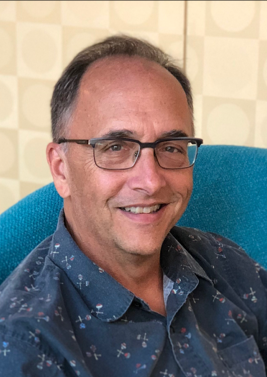
C. Marty Exline, MPA
Technical Assistance and Training Lead
Marty has over 30 years of administrative experience in disability services, including 23 years with the Missouri Assistive Technology program. As Director of the Missouri program, he was directly responsible for implementation of all state AT program activities, including serving as the Missouri program’s Policy and Funding Coordinator. Marty’s expertise also includes community living and implementation of the ADA, as well as AT policy and funding knowledge, especially in the areas of Medicaid, Medicaid waivers, and health insurance.
Ryan Rausch, MOTR/L, ATP

Technical Assistance and Training Lead
Ryan served for seven years as the co-manager of Wyoming Assistive Technology Resources (WATR), the state’s Assistive Technology Act program. Ryan’s work has focused on supporting an individual’s participation in everyday life activities, including work, school, and recreation. With a broad background in occupational therapy, Ryan draws upon his past work experiences in the schools, the Veterans Affairs health care system, home health care, and higher education to help inform his current work. Ryan’s passion is assistive technology, earning the Assistive Technology Professional (ATP) certification. Ryan is dedicated to increasing the availability of assistive technology devices and services for people with disabilities.
Funding Statement
This project is 100% supported by grant # H177Z250001 from the U. S. Department of Education, Rehabilitation Services Administration (RSA). Funding for FFY 2027 is $599,706. The contents are those of the author(s) and do not necessarily represent the official views of, nor an endorsement by, RSA or the U.S. Government.