
Hadley – Past, Present and Future – Reaching New Heights by 2030!
Hadley – Past, Present and Future – Reaching New Heights by 2030!
Description
There are new things happening at Hadley. Whether you’re a seasoned user or are new to this valuable resource, discover how Hadley’s offerings help you make the most of your resources and support the individuals you serve. Join us as Patrick McGartland, Hadley’s Chief Outreach and Development Officer, reflects on the past, highlights the present, and shares exciting plans for the future. Explore how Hadley is making a difference today in the lives of people who are blind or have low vision, and explore how you can help be a part of what’s next.
Release date: 2025
Video
Transcript
PATRICK: Hello, my name is Patrick McGartland. I am the Chief Outreach and Development Officer at Hadley. I want to thank you today for allowing me to present to you a brief history of Hadley, to update you on our current opportunities and activities and to tell you about exciting goals that we have for our future.
We are also going to talk about our new partner portal that enables you as a potential partner of Hadley to easily refer those in your community, those members and those patients you have to Hadley to take advantage of our services.
With that, I'd like to introduce our CEO, John Joe Farragher to tell you a little bit about Hadley from his perspective. Vision loss is a growing public health crisis. The number of Americans experiencing visual impairment due to an incurable eye disease like glaucoma, macular degeneration or diabetic retinopathy is expected to double in the coming years.
JOHNJOE: I'm Johnjoe Farragher, president and CEO of Hadley. Our risk of losing sight increases as we age, and as the US population grows older, more of us and our family and friends will be impacted by uncorrectable vision loss, affecting quality of life and heightening vulnerability to isolation, anxiety, cognitive decline and even falls.
I started noticing more and more things about being blind and visually impaired. You know that the world is not really geared for others, especially in my little town. It does make you want to give up, and I can understand because I didn't know where to go. But like thousands of others, Dennis found help with Hadley. For more than a century, people have adapted to vision loss, have turned to Hadley to live life on their own terms.
Our story began in 1920 when William Hadley, an educator who lost his sight at 55, set out to help others like him. Today, Hadley provides older adults experiencing vision loss and expanding range of practical help and social emotional support completely free of charge. Our interactive workshops, peer connections and compassion, and knowledgeable staff increase confidence, reduce isolation and nurture hope.
DIANE: Hadley is in the gap for me. Were it not that I discovered Hadley all of the different things that you guys have, I would still be sitting in that corner right over there crying. I don't think I could have gotten by without you, without Hadley.
JOHNJOE: Hadley's help comes directly to all who need it, online, by phone, and even through the mail in all 50 states in over 100 countries. And because we believe everyone should have the support they need, Hadley's Help is available at no cost. Our North Star goal is to help 1,000,000 people by the end of the decade. Like Dennis and Diane, learn, connect, and thrive, your support ensures that no one has to face vision loss alone. Join us in keeping Help Insight.
PATRICK: Just a brief background about Hadley. Hadley was founded in 1920 by a gentleman called Bill Hadley. When he was 55 years old. He lost his sight and with the encouragement of his wife and his family, decided to learn Braille and create a curriculum to teach others Braille. And essentially that was the founding of Hadley way back in 1920.
So from that point up until relatively recently, we were known as the Braille by mail school and was the largest correspondence school for Braille learning in the world. And we still do Braille learning. Don't want to dismiss that. But we also have begun to focus on other areas to help those with low vision. Our mission is to provide those with low vision the tools to adapt and thrive.
Our focus, in turn, has moved not just from Braille education, but to practical and social emotional support tools and programming to help those living with low vision. Because it's not just in the doctor's office with clinical support that people can better themselves with respect to their low vision challenges and their eye conditions, but it's really support for daily living and the emotional toll that low vision takes on individuals.
Hadley serves roughly 2 women for every man, 20% over the age of 65. Approximately 80% live with low vision, and 20% are family members or vision professionals. We are creating programming constantly to address our members, whether they be individuals living with low vision or family and friends who support them.
Who does Hadley serve? Nearly 80,000 of our members live with macular degeneration. That's nearly half. The other half experience eye conditions like glaucoma and diabetic retinopathy. Let's hear Jack's story as he describes his vision loss.
JACK: Hi, this is Jack. I'm 81 years old. I'm from Aiken, SC. I've lived here for 20 years. I'm originally from Lexington, KY. I have what's called ocular histoplasmosis. It's a fungal disease that primarily happens in the Ohio Valley, where I was from. I grew up in Louisville, KY which is on the Ohio River and in 1974 I was diagnosed with ocular histoplasmosis, which in general terms is bleeding of the retina.
I've had several bleeds over the years. I was declared to be legally blind in 1974 and have had been treated for about 50 years, numerous injections over the years and it was pretty much in fact. But in recent year and a half, it's really accelerated my vision. I'm losing a lot more vision. I had a major bleed about a year ago, a hemorrhage.
So it's been a trial for me of up and downs and, you know, trying to deal and cope with it. Probably the biggest challenges that I've faced over the years is being able to accept the changes in my vision. I think for, you know, to cope and adjust. And then, you know, I'll get hit again with, with some loss revision and I, you know, just repeat the process and I, you know, get kind of down and, and depressed.
And you've got to work through that with the help of my wife because it's just constant changes. And I think the constant changes are what gives me the most trouble. I just went through to my ophthalmologist on Tuesday and he's been kind of monitoring the macula because he said from the photos they're taking, they've noticed that your atrophy is setting in in the macula and destroying the tissue in my in my central vision.
And it hits me hard because I know that it's been changing. My vision has been changing in recent weeks and an accelerated clip. And after seeing him on Tuesday, it was confirmed that that this is happening where I'm having the, the loss of macular tissue. And if you know, leading for these problems in it and there's nothing they can be, there's no, there's no treatment to handle that.
So it's a matter of coping and I'm trying to get out more and not, you know, stay in the house to this. My comfort zone is my house, but I know that that can be a problem is re isolate yourself too much. I have to go on with my life probably aren't the biggest motivation that I received was from my wife.
He is my rock. He encourages me, but she knows that I that I have a habit of kind of kind of withdrawing into myself and it's not a good thing. So she said we're not going to sit here in the house and just dedicate we're going to get out and do things. So, you know, we're going out to dinner.
We have a plan where we're going out to dinner at least once a week. We have a couple that that we build a dinner with sometimes out there. I don't want to do it, but we're already committed. But the other couples and when I go, I'm OK. And that's what I got to remember that it's never as bad as I think it's going to be as you know, you know, as far as, you know, socializing with, you know, friends, etcetera. It just, I mean it just helps, you know, the same does and you hear it a lot. You're not alone. And that's very crude.
PATRICK: In the summer of 2024, the board at Hadley undertook a executive search and arrived at our new CEO, Johnjoe Farragher. A part of his mantra to come on board as our new CEO was to establish a North Star goal for the organization and that goal is to strive by 2030, by the end of the decade, to help 1,000,000 people impacted by vision loss free of charge.
There is no charge to members who take advantage of our services & up to be a member of Hadley. Just a quick overview of our services, we take a whole person approach to providing programming and content to help those with low vision. So we have on the one side of the coin, practical support.
We want our members to say I can do this again. And how we do that is we have 550 practical workshop videos. These include topics and videos that support daily living, technology, recreation, working, adjusting to vision, loss, and of course Braille. We also have on the social emotional side of our programming is support groups.
One of them is called Adjusting and Coping Together. This is a classic support group where 8 to 12 individuals meet on a consecutive 8-week basis at an appointed time and this is very highly moderated and it offers a tremendous amount of comfort for those who take advantage of it. We also have discussion groups on a monthly basis.
We have upwards to 100 individuals dialing in to discuss all sorts of different subjects such as cooking or travel or technology. Likewise, we have insights and sound bites and these are where individual members of Hadley dial in and describe their vision loss journey, their insights about what has helped them and how Hadley has really been a lifeline at times for their vision loss journey.
We also have podcasts. We have roughly 150 odd podcasts in our library and these are podcasts that are very member focus and very member centric. Conversations with experts, whether they be experts in scientific realm, on the physician side or on the social emotional side.
Helping our members to learn something new and exciting either in the field or they can help them with their daily life. Finally, we have an exciting peer-to-peer program. This peer-to-peer program matches individuals after a series of questions, once we've been identified to someone who would like to participate so that we can match one individual with appropriately with another individual.
And we have found it incredibly beneficial to them. In fact, 98% find it helpful, 80% helps them overcome feelings of loneliness, and that's even against things like family or church and support groups. 75% of our peers one year into the program stay connected and 52% are open to multiple connections. Bill and Greg are perfect example of what I'm talking about as they have become fast friends and peers together in the last two years.
We feel like this program can absolutely scale as we grow to helping a million members over the next 4 1/2 years. And by having a wider pool of individuals to choose from, we believe the connection points between those people in our peer-to-peer program will likely to have success, and success is demonstrated here in this survey. Something exciting I'm really looking forward to sharing with you now is our new Social Emotional Group video series.
This is a new product that we're going to be launching in 2026. And what we're doing is we're using the same typical structure in terms of thematic subjects that a regular support group would have over Zoom or in a physical setting. And we're using proxies, our members stories as proxies for the lack of someone sitting together in a room.
These are the themes that will be covered. Grief and loss triggers and anger and frustration, isolation and loneliness, asking for help, feeling like a burden, impact on relationships and self-esteem. So while individuals won't be sitting together, either literally sitting together or in a Zoom type session, they're going to have the opportunity on demand to consume these themes.
They'll be broken into 7 themes as I just mentioned, roughly 21 to 24 minutes per theme. And the value is you can come back to it and repeat watching it again and again if it really speaks to them, to watch it in full top to bottom. And then from there, come back to individual sessions that really speak to them. I'm going to introduce 2 to you right now to start is Anne Renard.
ANNE: My name is Anne Renard. And in 2018, I was diagnosed with macular degeneration. In 2021, my kids were here for Mother's Day and I noticed that I couldn't read the clock and just a few other things that were blurry when I went back to the retina specialist and gave me an injection. So for a year I was going almost every other week because it was changing so much.
Every time you lose some vision, it's almost like starting all over. I find the emotional adjusting and readjusting to be exhausting. And that was why I signed up for the Hazline peer-to-peer when my mom was in the hospital with congestive heart failure. I called my peer, I called Linda and I'm like, I'm pointless here because I can't drive.
I can't help. I was expecting her to say, oh, I know that's really hard. But she says, no, you can't drive, let it go. What can you do? OK, you're right. What can I do? It helped me change my attitude. And it opened the door for me to say I still have choices. I still have some control. So that was a really big difference for me.
UNKNOWN NARRATOR: Does this sound familiar? If, like Anne, you are facing vision loss, you know that it doesn't just change how you see the world, it changes how you live in it. It can shake your confidence. You may even feel like you're losing a piece of who you are. To further complicate matters for many, like in Anne's case, as time goes on, vision just keeps changing, so you need to keep adapting too.
And describe the roller coaster she was on adjusting and readjusting to her vision loss as being emotionally exhausting. Can you relate? Let's explore the ways changes to vision can impact emotions and our overall sense of well-being. We'll also share some tips others have found helpful for coping with and navigating these changes.
First off, let's talk about grief. It's a heavy word, and you may think of it only in the context of mourning the loss of a loved one, but sometimes it begins when your world starts to change, as Anne's did. Grief is often associated with feeling sad, but it can also show up as anger when someone, for instance, assumes you can see what's on the TV screen. Or it could be the frustration you feel when you're handed forms to fill out at a doctor's office, or feeling numb and unmotivated to get off the couch.
If you found yourself feeling any of this about your vision and the changes it is brought to your life, just know that these reactions are completely normal. In fact, they're so common as to be expected when we're confronted with major life changes. Another thing about grief is that it doesn't typically follow a straight path. Some days may seem manageable, other days the weight of the change may feel heavy again. This emotional roller coaster you may be feeling, while likely exhausting, is just how grief typically works.
It doesn't mean you aren't adjusting the way you should be, it's just that you miss being able to see the way you used to and it's hitting you hard at the moment. And also brings up a topic that hits many extremely hard. Giving up the car keys. When she says I'm pointless here. If I can't drive, I can't help. She is saying what many feel when their eyesight isn't reliable enough to drive anymore.
In fact, more than any other aspect of vision loss, having to stop driving tends to be felt most dramatically. It can feel like losing independence and a piece of your identity. There can be a sense of freedom that goes along with jumping in the car to run an errand or join a friend for coffee, and its loss is often felt intensely. Of course, you know that there are other ways to get around, but having to arrange for and ask for a ride can be difficult too.
Not surprising, many facing the scenario shut down and isolate themselves, which can lead to its own set of challenges. So how do you cope and adjust First off? It's important to note that grieving a loss, allowing yourself to fully feel it, doesn't mean that you are going to be stuck in the doldrums. There are some things you can do to help yourself cope and adjust and navigate through. An idea to start with is to simply acknowledge to yourself that you are feeling the loss.
Recognizing that this is a completely different life than you expected, that it is a loss for you, rather than pretending that nothing has changed or that it doesn't matter to you, can serve a purpose. It affirms what you're going through. It may even free up some energy, Energy you've spent trying to ignore how you actually feel. It's OK to say to yourself, this is hard and I really wish it wasn't happening to me. The very act of acknowledging this reality for many can be a bit of an emotional release.
Another thing that can help is to talk about how you're feeling. Let it out and tell someone else how you feel about the changes that have happened with your vision. For some, a therapist or counselor plays that role. For others, a friend or family member. You'll want to find someone who will listen without judging you or assuming that it's their job to fix things for you or simply cheer you up.
Tell them you just need them to listen to you and be there with you. And turn to her Hadley peer to find the support she needed. Someone who listened served as a sounding board and then challenged her to find a new way forward. Others find joining a support group of peers with vision loss to be helpful. It can be so powerful to share something hard and have someone else reply. I know it's hard for me to. A last tip for coping that many find helpful is simply this.
Remember to be kind to yourself. Give yourself time to emotionally adjust. Many of us are a lot more patient with other people in our lives than we are with ourselves. If that sounds like you, it may be time to cut yourself some slack. Give yourself credit for how far you've already come and celebrate any small wins along the way. When Anne's anger and frustration lessened a bit, she realized that she still was a capable person. She could still help her mom, but it would have to be in a different way.
As she phrased it, it opened the door for me. Her perspective began to shift. Whatever you may face along this road, just know that Hadley is here to walk alongside you. You don't have to face vision loss alone.
PATRICK: And the next one is Ron.
RON: My name is Ron Peterson. I went to school and studied engineering and had a successful engineering career and retired about 10 years ago and I began working as a volunteer at the Tijuana Estuary. I loved working out there because I always loved being around nature. So I was planting native plants and removing invasive plants and helping maintain and clear the trails and such.
But then about five years ago, I lost my vision to glaucoma. The bottom dropped out very fast and it kind of surprised me. I wasn't really prepared for it. I guess I was in denial and I wasn't able to work at the estuary. It just became harder and harder and finally I just couldn't do any of that sort of thing anymore. That was very disheartening to me and I was really in a funk. There are kind of in a deep hole for a few months.
Losing your vision can throw you into a bad place for lots of reasons, but not being able to work in yesterday was certainly one of them. One of the things I learned was how to ask for help. I'm one of those guys through the years. I'm driving, I get lost with my wife and I'm going to find my way. I'm going to, we're going to figure this out. I don't even ask someone.
But one of the things you learn when you're blind is you need help and you have to swallow your pride a little bit. And I, learned ask for help and I learned places to go to for help. I said, well, one of the things I did was I talked to the staff there at the estuary, said I want to continue to volunteer here. And I love, I love these plants.
What can we do and how can I help? And together we came up with this perfect solution that I would become a docent and I would guide visitors in sharing the beauty of these native plants using the other four senses besides vision. Turned out to be a big hit. What it did for me was amazing. It gave me a sense of meaning, and that was a very important part of how I climbed out of that hole to regain my life, to develop a full life once again. For me, it worked.
UNKNOWN NARRATOR: Hadley connects you to a whole community of support so you can move from feeling helpless to hopeful. Help us insight.
PATRICK: Both Ann and Ron are Hadley members who shared their story with us, and again, we're using their voice, their journey with vision loss to describe one of these themes. I trust you can see that this approach to a support group series is incredibly powerful, and it can really provide value to individuals and members of Hadley as we grow to a million members. Now I'd like to introduce our CEO, Johnjoe Farragher, again, asking for your help as a partner in the low vision community across the United States to help us grow and to deliver these services, these programming and our practical guides.
JOHNJOE: Hi, my name is Johnjoe Farragher. I'm the CEO and President of Hadley. So in 2018, just as Hadley was approaching their hundred-year anniversary, we felt like there was a way that we can augment our service and expand our services to focus in on a specific cohort and that's adults with vision laws. And that really was in the area of practical workshops and social emotional support.
So learning about the various diseases like macular degeneration, glaucoma, diabetic retinopathy to daily living techniques like cooking and adjusting to their new life. Second part is dealing with their emotional strength, loneliness, depression, anxiety. We have crafted programs like our peer-to-peer program that matches two different individuals so they can cope together.
We also have a help desk on staff being able to answer any questions that any of our members have on a daily basis. We think of both of these things as two pillars of the foundations that we're trying to provide to adults with vision laws. One of the things that we want to do is to provide a sense of community for our members. We feel that that sense of community helps them navigate the new world that they're dealing with.
So what are the next steps here at Hadley? Since we've launched Hadley 2 Point O, we've cumulatively serviced over 130,000 members, but we know there's more work to be done. This is a growing cohort of individuals. We think that by the end of 20-30 that there could be as many as 15,000,000 Americans that are dealing with some sort of vision loss. Our North Star goal is that we think we can provide our Hadley services to a million of them.
What that's going to take is for us to aggressively go out and make sure that anyone that can use Hadley's help knows about Hadley's help. And we think partnerships are a great way to achieve that mission. Together. We can simply help more people. This is a true case where the sum of the parts are greater than the whole. We look forward to working with you here at Hadley.
PATRICK: So how are we going to do this? We're going to do this with your help and with a dedicated team at Hadley. So as you can see, we have 6 individuals, myself included, who are on our outreach team ready to work together with each and everyone of you to help you and to enable you to refer your patients, your community members to Hadley to take advantage of our services. Please reach out to any one of us and we will help to enable you to refer to Hadley. Again, the goals of a partnership with Hadley with each and everyone of you is to provide help to anyone that needs it. Our goal is to help over 1,000,000 people by 20-30 and again, only with partners like you are we going to be able to do that successfully.
So partners can engage in several different ways and several different processes. You can help clients and patients during intake and introduce Hadley. Then perhaps during yearly evaluations you would introduce Hadley and provide patients and introduction into Hadley. During counseling sessions you can introduce Hadley family information packet or discharge packets are also fantastic opportunities to share with someone that the tools and benefits of Hadley. We also support you with quarterly check insurance and Spotlight, which recognizes on our social media platforms partners who are contributing mightily towards our goal, helping 1,000,000 individuals by 20-30.
We've created some partner tools, specifically a partner portal that is co-branded with your organization's information. Each one of the outreach members I showed earlier will train you on how to use that partner portal and again, provide quarterly check insurance to make sure that we are meeting your needs with the tools that we provide. What I'm going to show you now is just a brief snapshot of what the partner portal looks like.
So this is the Hadley website. And when you are enabled as a partner, you will see this partner portal for Hadley and you can select the button to access and submit a referral page. It's right there in the middle. There's several tiles at the top of the screen. The middle one says submit a referral. So submitting referral can be as simple as just clicking on that button. And there are two ways to submit a referral. The first is just typing in someone's first name, last name, e-mail address, and phone number. Or you can upload a CSV file which is more than one name at a time.
In manually referring and inputting some potential clients' information, you may not need to put all of that information in. Someone may not have an email address, but if they don't, you can leave that blank and just include that phone number, and someone from the Donahoe Center for Support will call that individual and onboard them to Hadley. Likewise, each individual who is a partner has assigned to them a unique referral URL and a QR code.
You can share this URL in text messages on social media posts or shared in newsletters or emails that you are regularly communicating with your members. You can make it shorter. Likewise, you can use this QR code. So it's as simple as right clicking, saving that QR code, printing it out or just using it on your cell phone and enabling someone to take a picture of that and off they go to the Hadley website.
Finally, all of our cobranded information on our partner page such as description's of all of the programs, the virtual support grouping. An example here has at the bottom QR code that is unique to your organization and you can print all of these out and hand them out to your patients and clients going forward. We have an appendix and resource tile that you all can use to refresh training for example.
Go through all of the PDF documentation that we have and FAQ sheets as well. If you have any further questions, you can log on to the portal. You can always e-mail at outreach@hadleyhelps.org or call our 1-800 number. Our outreach team has been at it for approximately six months and this is just a snapshot of the organizations around the country who have entered into a partnership agreement with Hadley to help refer their patients to Hadley.
Thank you again for the time. I really do appreciate you providing me this opportunity. gain, my name is Patrick McGartland and I look forward to working with each and everyone of you across the country as we together look to help one another with the services that Hadley has, the whole person approach we bring and you helping us to reach our goal of a million members by 2030. Thank you.
Presenter
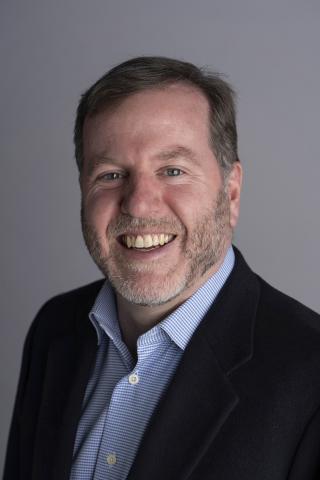
Patrick McGartland
Patrick is a business leader with over 25 years of experience in corporate development for entrepreneurial technology companies. He specializes in building international sales teams and partner networks, with a proven track record at companies like Baltimore Technology, Tower Technology and The Optime Group. Prior to joining Hadley, he co-founded Renaissant, an AI-powered logistics solution that optimizes freight flow from gate to dock to yard. Patrick is also dedicated to his community, serving as President of the Board for Fr. Gene’s Help Center, the largest free clothing closet in Southeast Wisconsin. He holds a BA in Philosophy and English Literature from Marquette University and an MBA from the University of Dublin, Trinity College.
Funding Statement
This project is 100% supported by grant # H177Z250001 from the U. S. Department of Education, Rehabilitation Services Administration (RSA). Funding for FFY 2027 is $599,706. The contents are those of the author(s) and do not necessarily represent the official views of, nor an endorsement by, RSA or the U.S. Government.